Frequently Asked Questions
General
Yes, 100%. Every card we sell is genuine and official. We source our cards from official products and verified suppliers only.
Yes! This is the official website for ethanscards. Same trusted seller, same quality - but with better prices since we don't pay eBay fees.
We're not currently buying cards, but this may change in the future. Follow us on social media for updates.
Discover
Discover is a swipe-based way to browse our stock. You tell us roughly what you collect - eras, rarities, condition, edition and a price range - and then you go through cards one at a time, keeping the ones you like. It's built for finding cards you weren't specifically searching for.
Try Discover →Swipe right to keep a card, or left to skip it. Swipe up to mark something as a top pick, which saves it to the front of your binder, and swipe down to tell us you want fewer cards like that one. There are buttons under the card for keeping and skipping if you would rather tap, and on a keyboard the arrow keys do all four, U undoes your last swipe, and I opens the card details.
Cards you keep collect in a binder rather than going straight to your basket, so nothing is committed until you say so. Review it at the end of each pack, or any time from the binder button in the top corner, then add what you want to your basket in one go. It's laid out like a real pocket page, and we re-check stock every time you open it in case something has sold.
Every ten swipes makes a pack. At the end of one you get a summary of what you kept, and then a fresh pack to rip open. It is just a way of breaking a long session into chunks - there is nothing to buy and nothing random about which cards you get.
No. There's a 'Skip to swiping' link on every step of the intro, and you can change your profile at any time from the Profile button while you swipe. Leaving something blank simply means you don't mind either way.
No. Your profile ranks cards rather than filtering them out, so exact matches come first and, once you have seen those, we gradually widen the net instead of stopping. You'll get a note when that happens, and any card that isn't an exact match will explain what's different about it if you open its details.
Every so often we'll put two cards side by side and ask which you'd rather have. A straight choice between two real cards tells us far more about what you like than a yes or no on one, and your answer immediately reorders the rest of the cards waiting for you. You can skip the question if you'd rather keep swiping.
If you keep keeping a kind of card that isn't in your profile, say Secret Rares, we'll offer to add it in one tap. It's only ever a suggestion, dismissing it means it won't ask again, and you can undo it from the Profile button.
Your profile, your binder and the cards you have already swiped are saved in your browser, so you pick up where you left off and you are not shown the same cards twice. None of it is tied to an account, and clearing your browser data clears it. Sound and haptics can be turned off with the speaker button, and that choice is remembered too.
Shipping & Returns
UK orders typically arrive within 1-3 working days. All orders are sent via Royal Mail 48 Tracked as standard, so you can follow your parcel every step of the way. Orders placed before 3pm are dispatched same-day.
Yes! Tracked UK shipping is free on all orders over £30. Orders under £30 have a flat rate of £3.30. All orders are sent via Royal Mail 48 Tracked.
Yes. If a card arrives not as described or you change your mind, you can return it within 14 days for a full refund. See our Shipping & Returns page for full details.
Every card is placed in a penny sleeve, then a toploader, then wrapped in a rigid mailer. Higher-value cards receive additional protection.
Cards & Pricing
1st Edition cards were printed in the initial run of a set and feature a "1st Edition" stamp. Unlimited cards were printed in subsequent runs. 1st Edition cards are generally more valuable.
We use a 5-tier grading system: Near Mint (NM), Lightly Played (LP), Moderately Played (MP), Heavily Played (HP), and Damaged (DMG). We grade conservatively, meaning your card will typically be in equal or better condition than described. See our Condition Guide below for full details.
We accept all major credit and debit cards, PayPal, Apple Pay, and Google Pay through our secure Shopify checkout.
Guides & References
Condition Guide
We use a 5-tier grading system. We grade conservatively, so your card will typically be in equal or better condition than listed.
For all new cards we are using a high quality scanner for images of the cards. Sometimes the scanner generates vertical lines on the image which are not present on the card. If you're unsure of condition after looking at the scans (we even offer a magnifying glass feature if you click into the images!) then please ask for further photos using our Contact Us page, we will respond as soon as we can!
What to expect: May have very minor edge whitening only visible on close inspection. Cards straight from sealed product are typically NM.
Example (tap to zoom):
What to expect: Minor edge wear, small surface scratches, or slight corner whitening. The card looks great at arm's length and is perfect for binders or casual play.
Example (tap to zoom):
What to expect: Visible edge wear, light creasing, or minor surface scuffing. A solid choice if you want the card for your deck at a lower price.
Example (tap to zoom):
What to expect: Heavy edge wear, noticeable creases or bends, and surface damage. Still perfectly usable in a sleeved deck and tournament-legal.
Example (tap to zoom):
What to expect: Heavy creases, tears, water damage, writing, or missing pieces. Best for collectors who need a placeholder or budget deck builders.
Example (tap to zoom):
Rarity Guide
Yu-Gi-Oh! cards come in many different rarities. Here's what each one means and how to identify them.
What it looks like: No foil treatment of any kind. The card name is printed in plain black text (or white on certain card types like Synchro or Link monsters). The artwork is a standard non-holographic print with a normal card border.
Common example
What it looks like: The card name is printed in silver holofoil lettering that reflects light, but the artwork remains non-holographic and the border is standard. This is the only visual difference from a Common.
Rare example
What it looks like: Visually identical to a Common card — plain card name, non-holographic artwork, standard border. Short Print refers only to a lower print run within the set, so there is no way to tell a Short Print from a Common just by looking at it.
What it looks like: A variant of Rare where the card name is printed in black holofoil lettering instead of the standard silver. The artwork and border remain non-holographic. Found primarily in Duelist League promos and Battle Pack products.
Black Rare example
What it looks like: The artwork is holographic and shimmers when tilted, but the card name is printed in plain non-foil text (black or white depending on card type). On newer prints the Level/Rank stars and Attribute icon also shimmer.
Super Rare example
What it looks like: The card name is printed in gold foil lettering and the artwork is holographic. Level/Rank stars and the Attribute icon also shimmer. Essentially a Super Rare with a gold foil name instead of plain text.
Ultra Rare example
What it looks like: The artwork has a distinctive diagonal cross-hatch holographic pattern (parallel lines running diagonally across the foil). The card name is printed in rainbow-coloured holographic foil that shifts colours when tilted. The Attribute and Level icons are also holographic.
Secret Rare example
What it looks like: A highly sought-after rarity. The card name is gold foil like an Ultra Rare, but the artwork, Attribute icon, Level stars, and card borders all have an embossed, raised-relief texture you can physically feel with your finger. The foil has a tactile, three-dimensional quality rather than a flat holographic shine. Originally discontinued in 2015 and returned in 2024.
Ultimate Rare example
What it looks like: One of the most sought-after rarities in the game. The card name is printed in very shiny silver foil. The artwork has most of its colour removed, appearing pale, washed-out, and almost translucent. The entire card has a holographic quality that produces a 3D effect when tilted, giving the image a ghostly, ethereal appearance.
Ghost Rare example
What it looks like: The rarest standard pull in modern sets and extremely sought-after. A horizontal, lattice-like holographic pattern is applied across nearly the entire card face — borders, artwork, name, and all elements — except the text box. The card name has a prismatic holographic foil similar to Secret Rare. Far more foil coverage than any other standard rarity.
Starlight Rare example
What it looks like: Similar to a Secret Rare, but the holographic foil pattern on the artwork runs in horizontal and vertical parallel lines (a grid pattern) instead of diagonal cross-hatch. The card name has a speckled, multi-coloured holographic foil rather than a single solid holographic colour. Found in special products and prize cards.
Prismatic Secret Rare example
What it looks like: A highly sought-after modern rarity introduced in 2022. The artwork, card border, text box border, Level/Rank stars, and Attribute icon all have a rainbow-coloured reflective pattern. The card also has a slightly raised, embossed texture with an engraved appearance similar to an Ultimate Rare, giving it a fingerprint-like foil pattern.
Collectors Rare example
What it looks like: The card name is printed in a speckled holographic champagne-gold foil instead of the standard rainbow of a Secret Rare. The entire card surface has a Secret Rare-style holographic foil treatment similar to Starlight Rare technology. A translucent "25th" anniversary watermark appears in the centre of the text box.
Quarter Century Secret Rare example
What it looks like: The card name, artwork, artwork frame, text box border, and card border are all covered in reflective gold foil. Level/Rank stars are also gold. The overall effect is a card with prominent gold colouring across nearly every element. Found in Gold Series products.
Gold Rare example
What it looks like: Identical to a Gold Rare (gold foil name, artwork, borders, and frame) but with the Secret Rare diagonal cross-hatch holographic texture overlaid on top of the gold foil. This creates a rainbow shimmer effect layered over the gold base. Found in Premium Gold sets.
Gold Secret Rare example
What it looks like: The entire card face is covered with a foil layer containing a repeating pattern of small star shapes. The card name, artwork, borders, and all elements sit beneath this star-patterned foil overlay. Found in Battle Pack and Star Pack products.
Starfoil Rare example
What it looks like: The entire card face is covered with a reflective foil coating that has a shattered-glass or cracked-ice pattern. Every element of the card — name, artwork, borders, text — sits beneath this broken-glass foil layer. Exclusive to Battle Pack 3: Monster League.
Shatterfoil Rare example
What it looks like: The entire card face is covered with a foil layer containing a shimmering pattern of small squares (mosaic tiles). Similar to Starfoil Rare but with square shapes instead of stars. Exclusive to Battle Pack 2: War of the Giants.
Mosaic Rare example
What it looks like: A translucent holographic film covers the entire card face, making the whole surface reflective. The specific pattern of the overlay varies between products — fine bands, dot-grids, or broken-glass textures. Found primarily in Duel Terminal products.
Parallel Rare example
What it looks like: Combines the Ultra Rare treatment (gold foil card name and holographic artwork) with an additional Parallel holographic coating over the entire card surface, including borders and text areas. Found in Duel Terminal sets.
Ultra Parallel Rare example
Edition Guide
Yu-Gi-Oh! cards are printed in different editions. The edition affects both collectability and value.
First Edition cards were produced in the initial print run of a set and feature a gold "1st Edition" stamp below the card artwork on the left-hand side. Because they were printed in smaller quantities than later runs, 1st Edition cards are almost always more valuable than their Unlimited counterparts — particularly for older and competitively relevant cards. The 1st Edition stamp is one of the first things collectors check when evaluating a card's value.
Unlimited Edition cards are printed after the initial 1st Edition run has sold out. They are visually identical to 1st Edition cards except they lack the "1st Edition" stamp — the space below the artwork on the left is blank. Unlimited prints are generally more common and more affordable, making them ideal for players who want the card for their deck without paying the collector premium. In recent years, Konami has moved away from the 1st Edition / Unlimited distinction for most core booster sets.
Limited Edition cards feature a "Limited Edition" stamp and are found in promotional products rather than standard booster packs. This includes collectible tins, special edition boxes, Gold Series sets, Sneak Peek participation cards, magazine promos, and championship prize cards. On Limited Edition cards the Eye of Anubis hologram is gold (the same as 1st Edition), unlike the silver hologram on Unlimited cards. While the "Limited Edition" name might suggest scarcity, many of these products are mass-produced. However, certain Limited Edition promos from older or discontinued products can become quite valuable due to genuine supply constraints.
When a listing is marked "Mixed Editions", it means the cards included may be a combination of 1st Edition, Unlimited, and/or Limited Edition prints. This is typically seen on multi-card lots or bundles where the exact edition of each individual card may vary. The listing description and images will show which editions are included wherever possible.
Key takeaways
- 1st Edition cards are generally the most valuable due to lower print runs
- Unlimited cards are identical in gameplay — the difference is purely collectible
- Limited Edition cards come from special products, not booster packs
- Recent core sets no longer use the 1st Edition / Unlimited distinction
Professional Grading Guide
Some of our cards are professionally graded and encapsulated by third-party grading companies. Graded cards have been authenticated and assigned a condition score by expert evaluators.
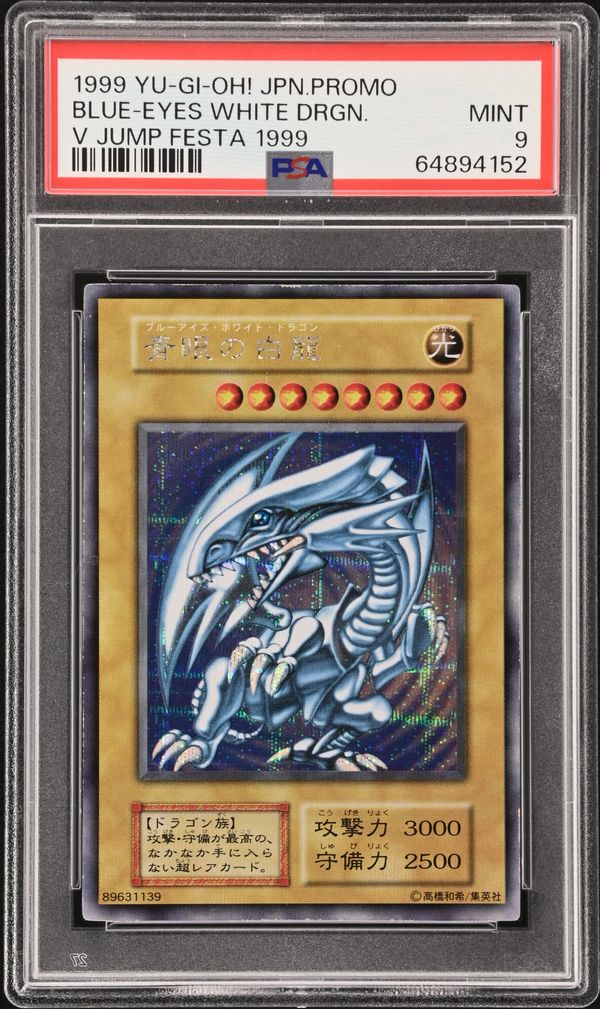
PSA is the industry standard for card grading. Their population reports track exactly how many copies of each card exist at each grade, which helps determine rarity and value. You can verify any PSA cert number on their website.
Grade scale: 1 (Poor) to 10 (Gem Mint). A PSA 10 is the highest grade and commands the strongest premiums.
Verify a PSA cert number →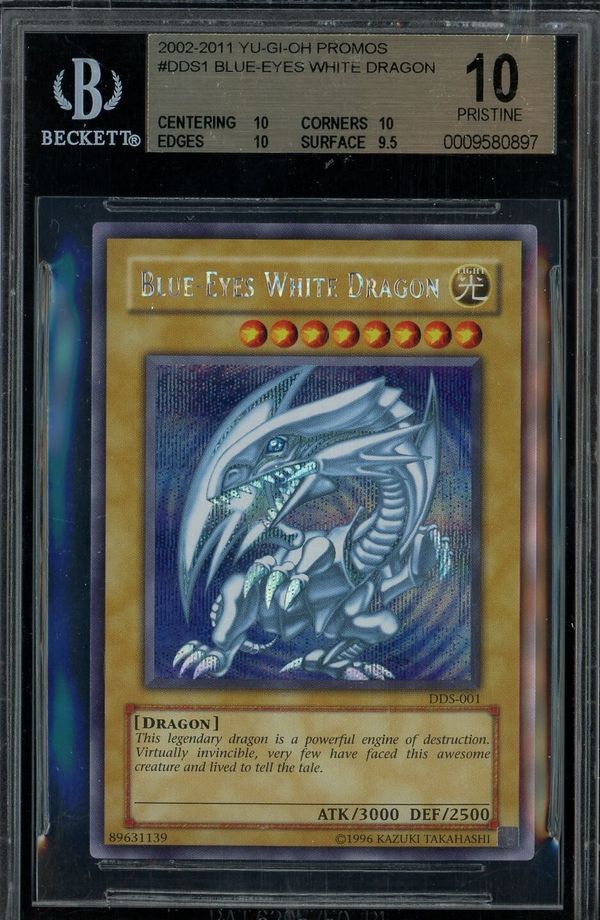
Beckett's sub-grade system gives collectors a more detailed breakdown of card condition. A BGS 9.5 "Gem Mint" is roughly equivalent to a PSA 10 in most collectors' eyes. Their Black Label 10 is considered the pinnacle of card grading.
Grade scale: 1 (Poor) to 10 (Pristine). A BGS 10 "Black Label" (all four sub-grades at 10) is the rarest and most valuable grade.
Verify a Beckett cert number →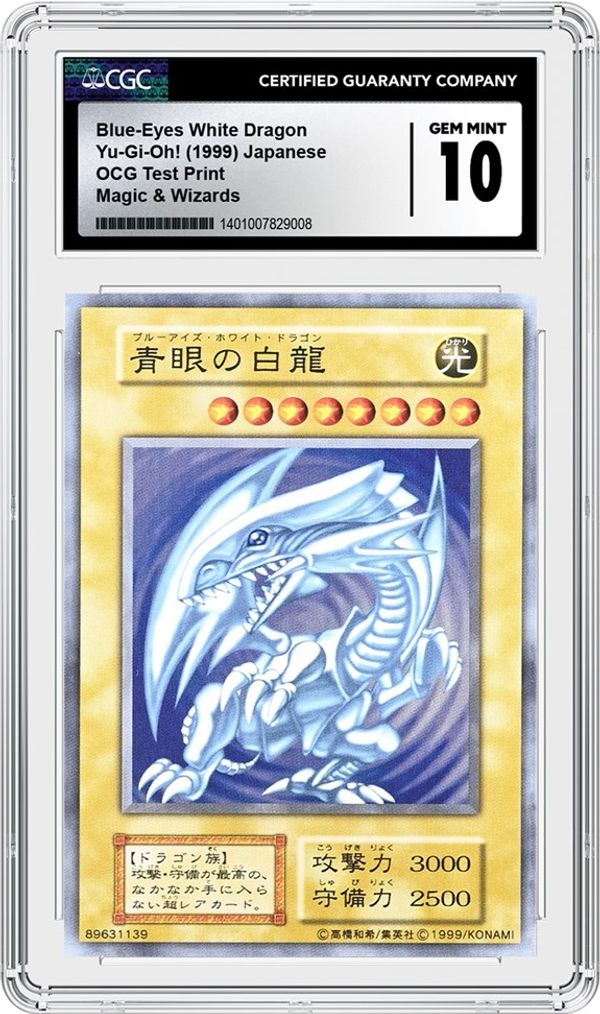
CGC has quickly gained traction in the trading card market. Their cases feature a distinctive design and their grading standards are considered strict. CGC cards are generally more affordable than PSA or BGS equivalents, making them a popular choice for collectors entering the graded market.
Grade scale: 1 (Poor) to 10 (Pristine). CGC Perfect 10 is their highest designation.
Verify a CGC cert number →Why buy graded cards?
- Guaranteed authenticity and condition verified by a trusted third party
- Tamper-evident case protects the card from further wear
- Standardised grade makes it easy to compare value across sellers
- Population data shows exactly how rare a particular grade is
- Higher resale confidence — buyers trust professionally graded cards
European vs North American Print Guide
Yu-Gi-Oh! TCG cards are printed at different regional facilities. Differences exist across all rarities, but are most notable on Ultimate Rares and Secret Rares.
All Yu-Gi-Oh! TCG cards sold in the West are manufactured by Cartamundi, but at different facilities depending on the region. North American (NA) prints are produced in Dallas, Texas, while European (EU) prints come from facilities in Belgium and Germany. Although the cards are functionally identical, differences in card stock, ink density, and foil characteristics give each region's cards a distinct look and feel that collectors can learn to identify. These differences exist across all rarities — from Supers and Ultras through to Secrets and Ultimate Rares — but are most dramatic and collectible at the higher rarities highlighted below.
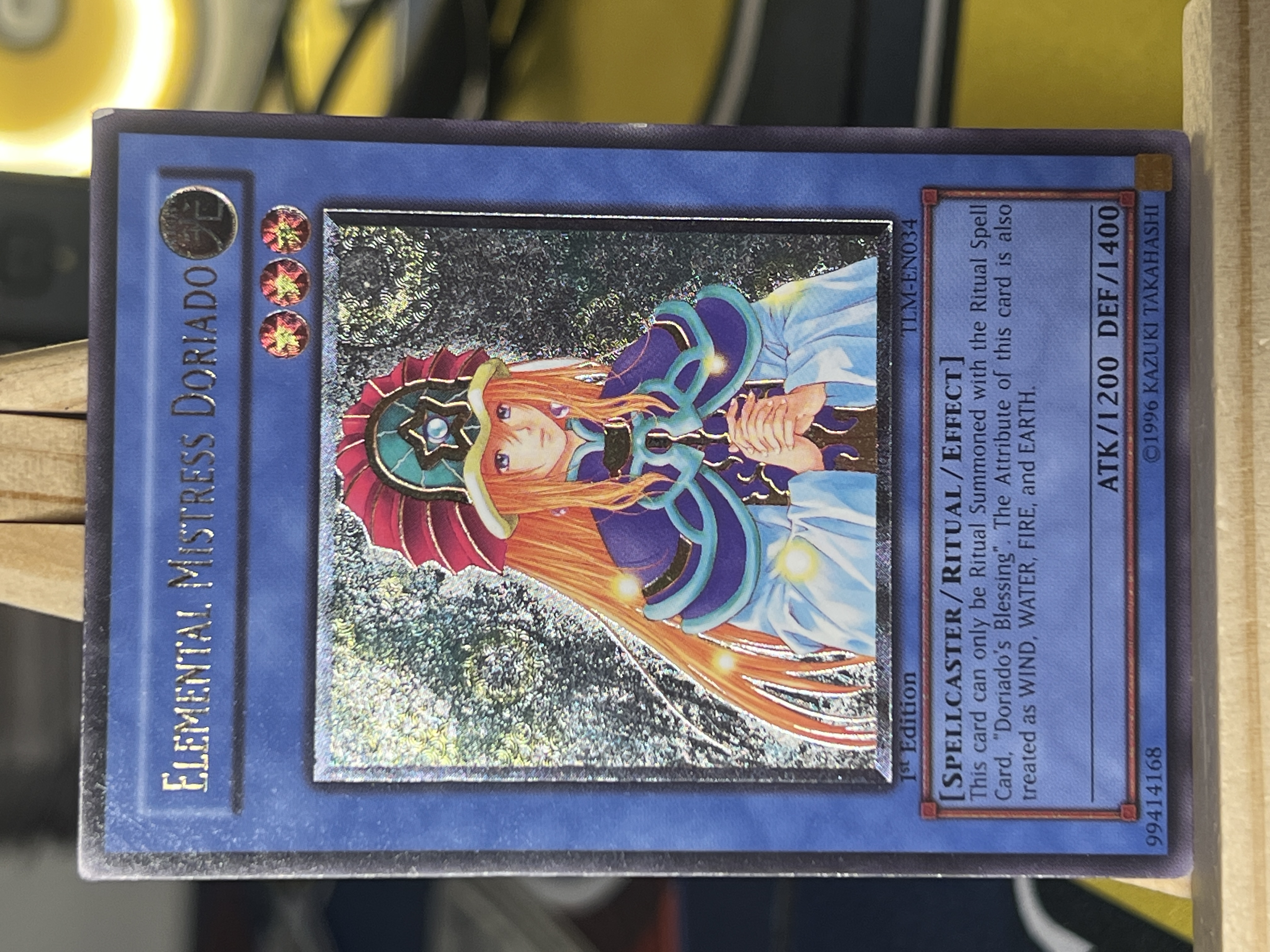
Ultimate Rares show the most dramatic regional differences. European prints tend to use darker, denser ink which makes the signature embossed details — the raised artwork, textured borders, and star pips — appear more sharply defined and contrasty. North American prints, on the other hand, often have a brighter, more vivid holographic shimmer across the embossed areas. Because Ultimate Rares were discontinued from 2015 to 2024, older copies in either variant are scarce, and cross-regional scarcity can drive significant premiums.
Elemental Mistress Doriado (TLM-EN034) — EU vs NA
 EU
EUEuropean Print
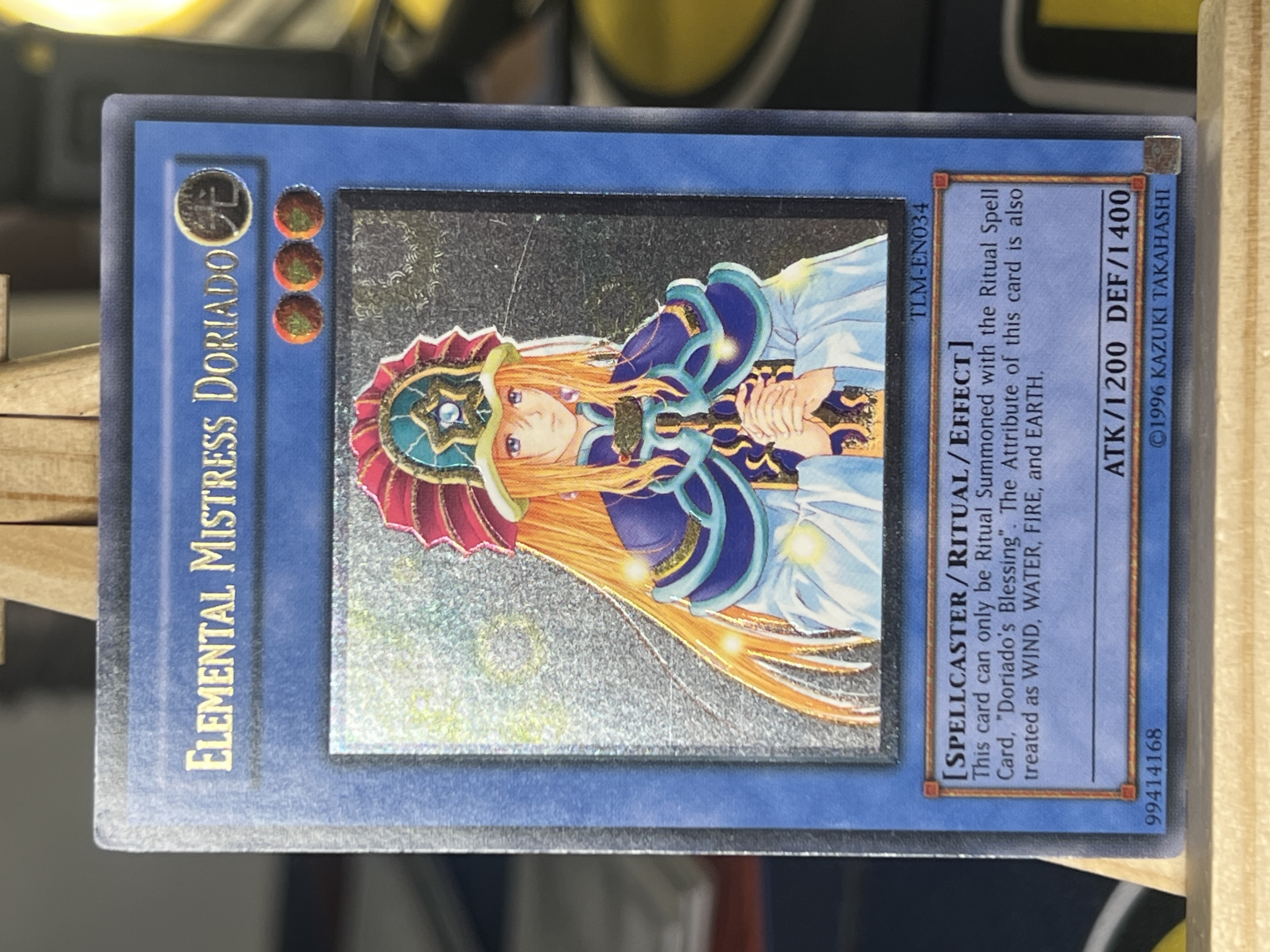 NA
NANorth American Print
Secret Rares exhibit perhaps the most obvious visual difference between regions. After Konami updated the foil process around 2014, European prints retained the classic diagonal dot-pattern holographic foil, while North American prints switched to a thicker cross-hatch pattern. Many collectors prefer the EU version for its "classic" Secret Rare look, which can command a premium depending on the card.
Wind-Up Zenmaines (PHSW-EN087) — EU vs NA
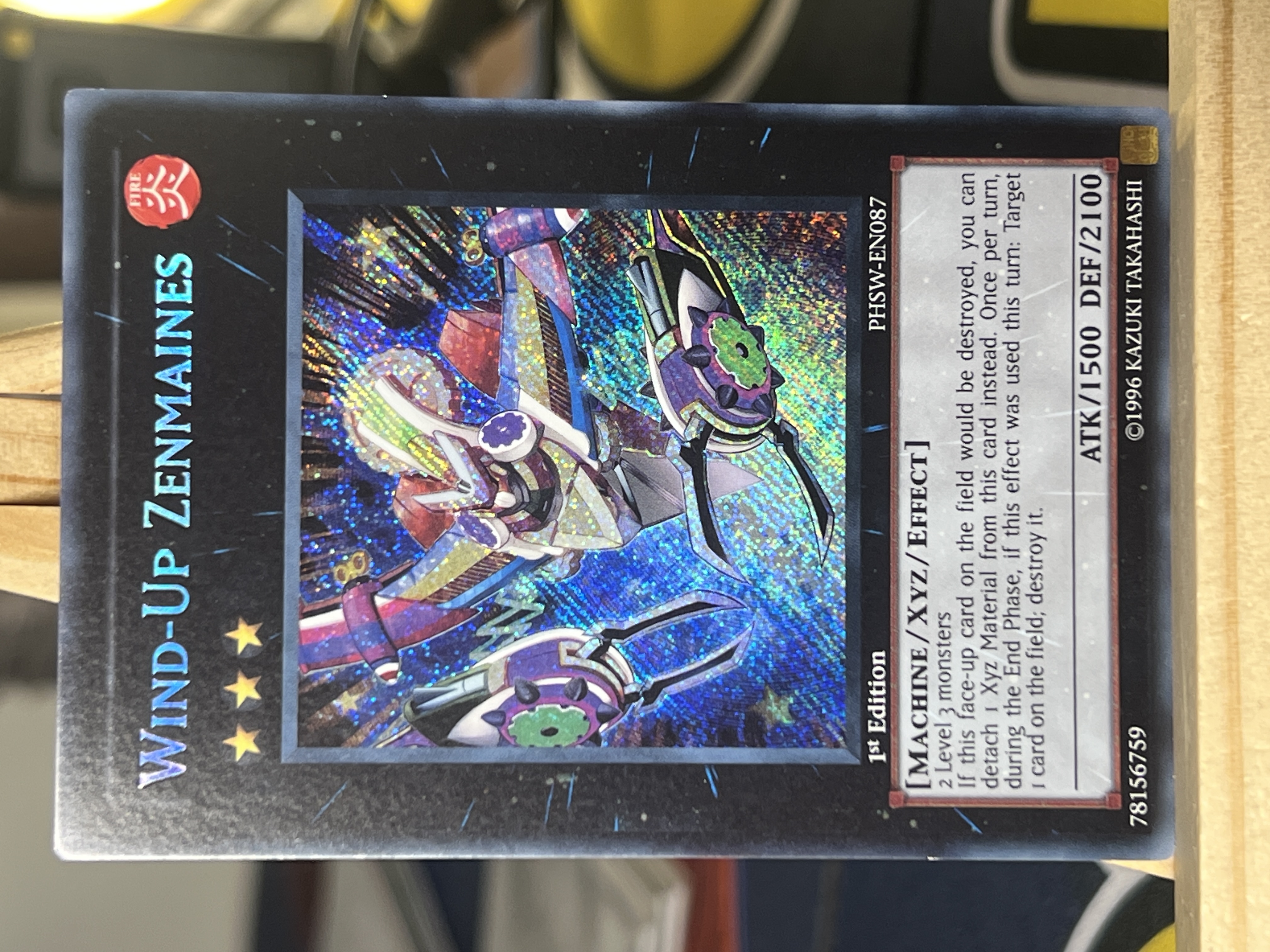 EU
EUEuropean Print
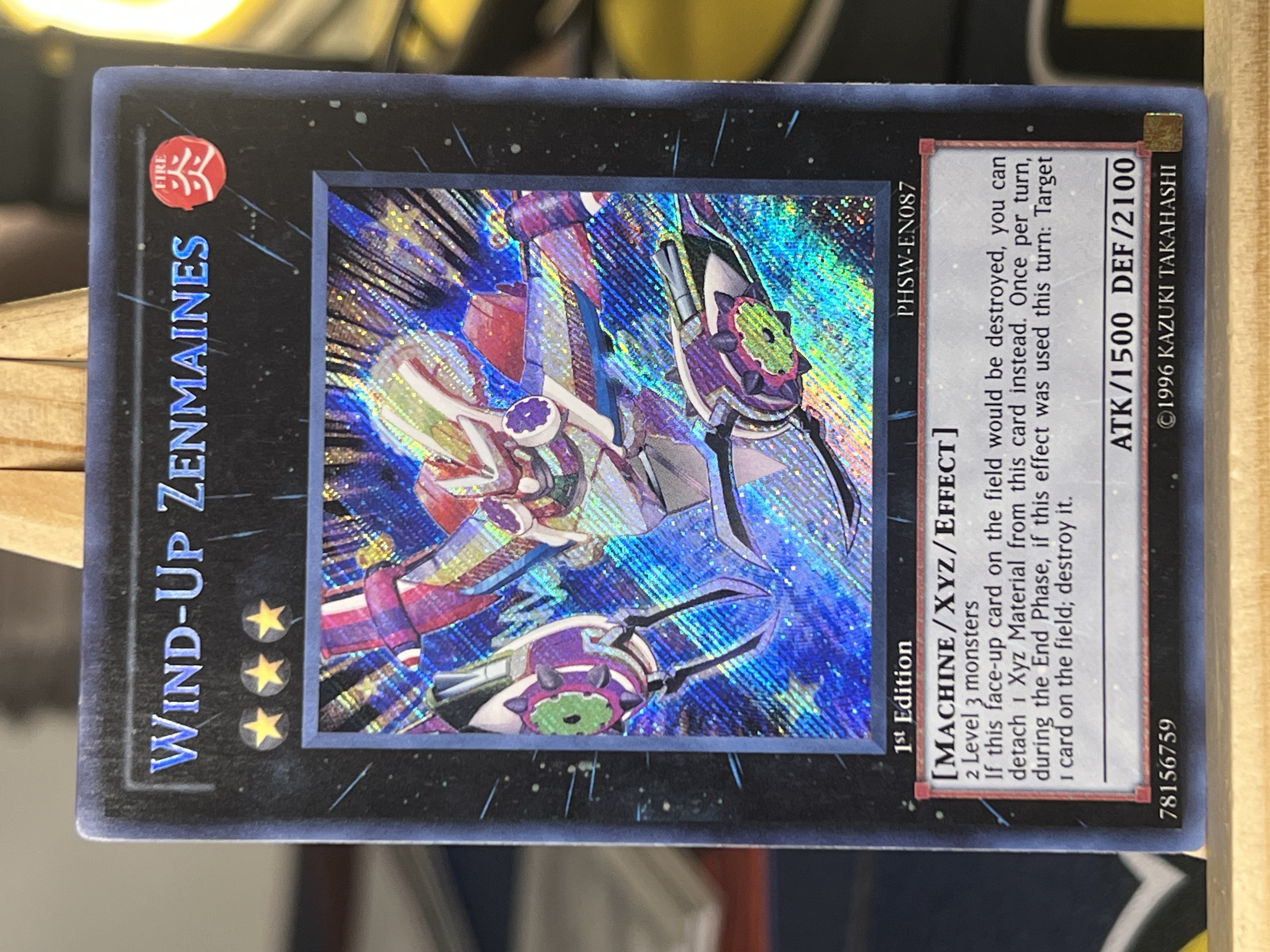 NA
NANorth American Print
Print region matters because cross-regional scarcity can drive price premiums — a European-printed Ultimate Rare may be far harder to find in North America and vice versa. Tournament legality is identical regardless of print region; the distinction is purely aesthetic and collectible. Some collectors strongly prefer one region's foil style or card stock feel, and high-end cards can sell for meaningfully different prices depending on the variant. We label print regions on high-value cards so you always know exactly what you're buying.
Key takeaways
- Both EU and NA prints are 100% authentic and fully tournament-legal
- Differences are purely aesthetic and collectible — card stock, ink, and foil vary by facility
- We label print regions on high-value cards so you always know exactly what you're getting
Misprint Guide
Misprints are factory errors that occur during the printing process. Some are barely noticeable, others are dramatic — and many are highly collectible.
A misprint is any card that left the factory with an unintentional error during the printing or cutting process. These are genuine manufacturing defects — not damage caused after production. Misprints can range from barely noticeable ink spots to dramatic errors like entirely wrong card backs or missing foil layers. Because they are genuine factory errors on authentic cards, misprints are fully tournament-legal (provided the card is still identifiable in a sleeve).
Miscut cards were cut incorrectly during production, resulting in the artwork and borders being visibly shifted or off-centre. Minor miscuts (slightly shifted borders) are relatively common and add a small premium. Major miscuts — where you can see part of an adjacent card — are rarer and significantly more valuable. Extreme examples where the card is cut diagonally or shows large portions of another card can fetch very high prices from misprint collectors.
Example of a miscut Yu-Gi-Oh! card with visibly shifted borders
Ink errors occur when the printing press applies too much, too little, or the wrong colour ink. Common examples include faded or washed-out artwork, oversaturated colours, ink smudges or streaks across the card face, and cards printed with a missing colour layer (e.g. a card with no yellow ink will appear with a blue/purple tint). These errors vary wildly in desirability — dramatic colour shifts are highly collectible, while minor smudges are less sought-after.
Comparison of a normal Gate Guardian card next to a faded ink error version
Text errors include misspelled card names, wrong card names printed on a different card's body, incorrect ATK/DEF values, missing effect text, or wrong set numbers. These are among the most collectible misprints because they are easy to verify and clearly documented. Notable examples from Yu-Gi-Oh! history include cards with completely wrong names or cards referencing the wrong archetype in their effect text. First-print-run text errors that Konami later corrected are especially prized.
Example of the infamous DB1 rare misprints, Flame Swordsman with the name 'Cyber-Stein'.
Foil errors affect the holographic layer applied to Super Rares and above. Examples include cards with no foil at all (a "no-holo" error on what should be a Super or Ultra Rare), misaligned foil where the holographic pattern is shifted relative to the artwork, double foiling, or the wrong foil type applied (e.g. a Secret Rare foil pattern on a card that should be Ultra Rare). Missing-foil errors on high-rarity cards are particularly sought-after by collectors.
B. Skull Dragon with a downward misaligned foil layer
Test print cards are produced by the factory to calibrate printing equipment before a production run begins. They typically feature bold CMYK colour bars (cyan, magenta, yellow, and black stripes), registration marks, or gradient test patterns printed on genuine Yu-Gi-Oh! card stock. These cards are never meant to leave the factory and are usually destroyed, making any that survive extremely rare collectibles. Some test prints feature partial card artwork overlaid with colour calibration patterns, while others are purely technical prints with no game imagery at all. Because they offer a fascinating glimpse into the manufacturing process and are so scarce, test print cards are highly prized by misprint and oddity collectors.
CMYK colour bar test print card used for factory calibration
Misprint value depends on three factors: severity (how dramatic the error is), rarity (how few copies exist with that error), and desirability (how visually interesting or historically significant it is). A barely off-centre common card might add a few pence, while a dramatically miscut Secret Rare or a wrong-back error card can be worth many times the normal card's value. The misprint collecting community is niche but passionate, and truly exceptional errors can command surprisingly high prices. There is no fixed pricing guide — each misprint is unique.
The key distinction is that misprints are factory errors present from the moment the card was produced, while damage occurs after production. Misprints will be consistent across the card (e.g. a colour shift affects the entire print, a miscut has clean machine-cut edges). Damage tends to be localised and irregular — scratches, creases, peeling foil, water stains, or ink rubbed off from handling. If you're unsure whether a card is misprinted or damaged, look at the edges: factory miscuts have clean, straight edges, while post-production cuts or tears will be rough or uneven.
Key things to know
- Misprints are genuine factory errors — they are not damaged or altered cards
- All misprints are tournament-legal provided the card is identifiable in a sleeve
- Value depends on severity, rarity, and visual appeal — each misprint is unique
- We clearly label and photograph any misprints in our listings so you know exactly what you're buying
Sealed Singles
What it means when a single card listing is marked as “Sealed”.
Sealed
About Sealed Singles
Some of the singles we sell are still factory-sealed in their original packaging — typically promotional cards that were distributed inside tins, special edition boxes, sneak peek kits, or other sealed products. Rather than opening the product to remove the card, we sell the promo exactly as it came from Konami: unopened and untouched.
Why collect sealed singles?
Many collectors prefer sealed promos because the card inside is guaranteed to be in pristine, pack-fresh condition with zero handling. A sealed promo is also a mini time capsule — it proves the card has never been played, sleeved, or exposed to the elements. For older or discontinued products, sealed promos can carry a meaningful premium over their opened equivalents.
What to expect
If a listing has the "Sealed" badge, the item you receive will still be in its original sealed packaging. The card inside has not been removed, inspected, or graded — what you see in the product photos is exactly what you will receive. Because the card is sealed, we cannot assess its condition beyond what is visible through the packaging.
Key things to know
- Sealed singles are typically promotional cards from tins, special editions, or sneak peek kits
- The card has never been removed from its original packaging
- Sealed promos are guaranteed to be in untouched, pack-fresh condition
- Some collectors prefer sealed versions for their pristine state and collectability
Product Types
The different types of products available on our store and what each one means.
Singles
Individual trading cards sold separately. Each listing is for a single card in a specific condition, edition, and rarity. This is our core product — browse thousands of authentic Yu-Gi-Oh! singles from every era.
Bundle
A curated selection of multiple cards sold together as one listing. Bundles offer great value and may include cards from different sets, rarities, and conditions. The exact contents are shown in the listing description and images.
Sealed Single
A single card still in its original factory-sealed packaging. These are typically promotional cards from tins, special editions, or sneak peek kits that have never been opened. Guaranteed pack-fresh condition.
Structure Deck
A pre-built 40+ card deck ready to play out of the box. Structure Decks are built around a specific theme or strategy and include a mix of new cards and reprints. Great for beginners or as a foundation for competitive builds.
Starter Deck
An introductory deck designed for new players. Similar to Structure Decks but with simpler strategies and often includes a rulebook and playmat. Ideal for learning the game.
Booster Pack
A sealed pack containing a random assortment of cards from a specific set. Each pack typically contains 9 cards with at least one guaranteed rare or higher rarity card. The thrill of the pull!
Booster Box
A sealed box containing 24 booster packs (or 15 for some sets). Buying a full box gives you the best odds of pulling the rarest cards from a set and is the most cost-effective way to open packs.
Promotional Pack
Special packs given out at events, tournaments, or as promotional items. These often contain exclusive cards not available in regular booster sets. Highly collectible.
Special Edition
A sealed product containing booster packs plus exclusive promotional cards. Special Editions bridge the gap between sets and often include hard-to-find variant cards.
Collector Tin
A decorative metal tin containing booster packs and exclusive promotional cards featuring popular monsters. Collector Tins are released annually and are popular gifts and collectibles.
Playmat
A high-quality rubber or fabric mat used as a playing surface for card games. Playmats feature official artwork and protect your cards during play. Both functional and collectible.
Accessory
Card sleeves, deck boxes, binders, and other accessories for storing, protecting, and displaying your collection. We stock official and premium third-party accessories.
Collectible
Figures, pins, art cards, and other Yu-Gi-Oh! collectible items beyond trading cards. These include official merchandise and limited-edition items.
Apparel
Official Yu-Gi-Oh! clothing and wearable merchandise including t-shirts, hoodies, and hats featuring iconic card artwork and logos.